Share this article and save a life!
Everyone calls FQHCs resilient. The numbers say something else. 📊
Synergy Billing just released The FQHC Benchmark Report, a national analysis combining HRSA Uniform Data System data with verified IRS Form 990 filings from 1,139 health centers. The research universe covers 1,356 HRSA-funded centers serving 32.7 million patients.
Three numbers stood out to me immediately.
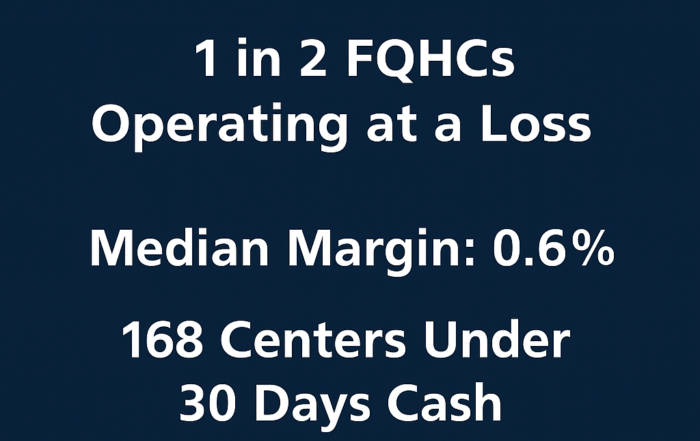
🔹 0.6%: The median operating margin among eligible health centers.
🔹 45.9%: The share that reported an operating loss. That is 523 of 1,139 centers.
🔹 168: The number of centers operating at a loss with fewer than 30 reported days of cash on hand.
Nearly half of these organizations are in the red. Right now. Not as a future projection.
And yet the public conversation keeps treating FQHC financial strain as a funding cliff problem, something that arrives at the end of a legislative calendar when a fund expires. What this report makes clear is that the cliff is not coming. It is already underfoot for hundreds of centers.
💡 One finding deserves particular attention: 62 health centers reported positive total margins while losing money on operations. Their bottom line looked fine. Their operating reality did not. That gap between reported financial health and actual operating performance is exactly the kind of thing that catches boards and leadership teams off guard.
According to Synergy Billing, the median center received $63.52 for every $100 billed across all payers. That gap between charges and collections is not automatic bad debt. It is a system built with layers of complexity that erode revenue before anyone notices.
I think about this constantly at Oatmeal Health. The centers we serve are running lean. They are navigating Medicaid eligibility changes, grant competition timelines, PPS rate fluctuations, and documentation requirements all at once. A 0.6% median margin does not leave room for any of that to go wrong.
When cash runs out before the next grant disbursement, the question is not about strategy. It is about whether to make payroll.
That is the operating reality no policy brief captures.
This report does not make headlines the way a closure does. But it should. 168 centers sitting at an operating loss with fewer than 30 days of cash is not a warning sign. It is a situation that can unravel faster than any board or leadership team can respond.
Safety-net care is not failing from a single dramatic blow. It is thinning from the inside, center by center, quarter by quarter.
👉 Follow Jonathan Govette, CEO of Oatmeal Health, for daily healthcare insights on LinkedIn. Deeper dives in The Oatmeal Bite on Substack: https://news.oatmealhealth.com
Share this article and save a life!
Author:
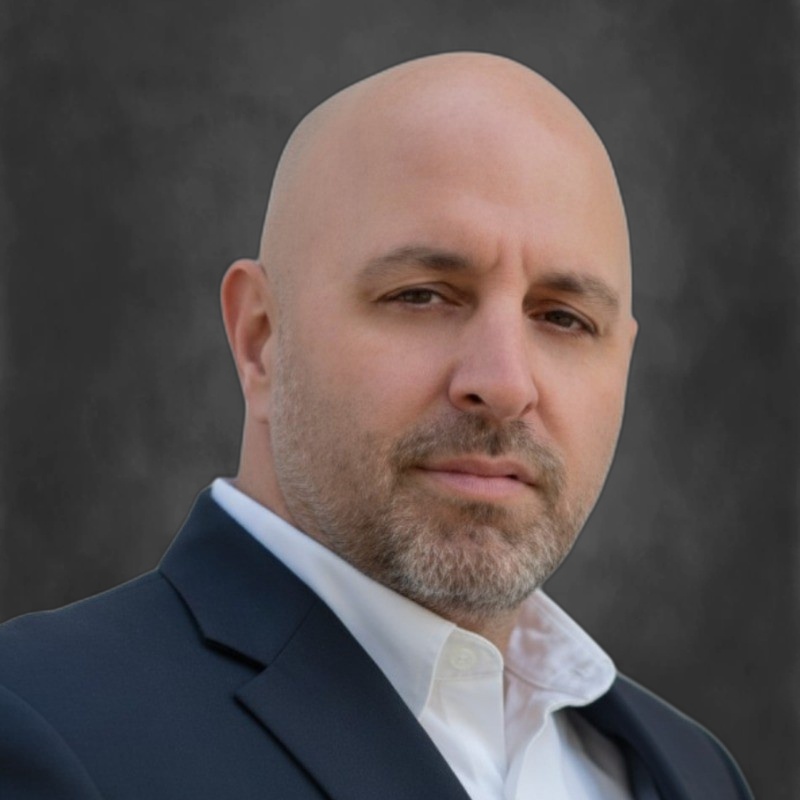
CEO/Co-Founder @ Oatmeal Health | AI Lung Cancer Screening | Almost Became a Doctor | Engineer | Follow to Share What I’ve Learned Along the Way
I help patients get the care they need earlier, preventing late-stage cancer.
That’s been the throughline across three companies and almost 20 years in healthcare. At ReferralMD, we fixed broken referral networks so patients didn’t fall through the cracks. At Oatmeal Health, it’s lung cancer: building the diagnostic and screening infrastructure so the 85% of cases caught too late get caught early instead.
Today as CEO of Oatmeal Health, I lead a team embedding AI into radiology workflows to turn routine lung CT scans into reimbursable cancer risk assessments. We partner with FQHCs to reach underserved communities, and with health systems and payers to make early detection economically sustainable. Think HeartFlow or Cleerly, but for lungs.
Between companies, I advised at Techstars and Plug and Play, mentoring founders building in digital health. That experience shaped how I think about what separates companies that ship from companies that stall: distribution, reimbursement, and clinical trust, not just technology.
I’m a CancerX alumnus, a 3x healthcare founder, and someone who believes the biggest problems in cancer aren’t scientific. They’re operational.
We’re hiring mission-driven builders at Oatmeal Health. If you want to work on something that matters, reach out.
When I’m not working, I’m traveling, mentoring, and keeping up with one very energetic husky. 🐾
Substack – The Oatmeal Bite:
Millions of patients get less care because of who they are, where they live, or how they look. I’m fighting to change that. CEO @OatmealHealth, a startup built for the underserved. The Oatmeal Bite: intel for clinicians, investors, and advocates.
Jonathan Govette
CEO of Oatmeal Health
Substack:
https://oatmealhealthjonathangovette.substack.com/