Share this article and save a life!
Fewer than 3 in 10 people living with HIV who qualified for lung cancer screening ever got a scan. 🎯 Eligibility nearly tripled. Utilization stayed flat.
That gap should stop you cold.
According to The American Journal of Managed Care, a study published in the International Journal of STD & AIDS looked at people living with HIV at a Southeastern HIV clinic. Lung cancer screening eligibility jumped from 6% to 15% between 2018 and 2023. But fewer than one-third of eligible patients ever received a low-dose CT scan during that same period.
Let that land.
More people qualified. The scan was covered. The clinic was already seeing these patients regularly for antiretroviral therapy management. And still, the screening did not happen.
🔹 62% of patients in the study had a smoking history
🔹 Median smoking burden: 40 pack-years
🔹 Roughly half of ever-smokers were still active smokers at the time of the study
🔹 Lung cancer is now the leading cause of cancer death among people with HIV in the US
This is not a guideline problem. The USPSTF broadened eligibility. That work is done.
This is an execution problem.
People with HIV are already in clinical contact. They have providers. They have appointments. They are deeply engaged in their own care, often more so than the general population. And yet the referral, the prompt, the navigation step to get them scheduled for a CT scan simply never happens.
💡 The Screening Execution Gap: A 3-Part Framework
1. Eligibility expansion without embedded workflows creates the illusion of progress
2. High-contact patient populations are screened at the same rate as low-contact ones when navigation is absent
3. EHR prompts, care navigation, and reminder workflows are not optional features. They are the intervention.
Save this if you’re designing screening programs for high-risk populations. The framework above is what separates a screening program from a screening policy.
At Oatmeal Health, we live in this gap every single day. The communities we serve, people who are uninsured, underinsured, facing Medicaid coverage uncertainty, with high tobacco exposure and competing life demands, they qualify for lung cancer screening on paper. But paper does not get anyone a scan.
The AJMC piece points directly at what works: integrating EHR prompts, navigation, and reminder workflows into the care settings these patients are already using. That is the whole game. Meet people where they already show up. Remove every step that requires them to do something extra on their own.
⚠️ This is not unique to people with HIV. This pattern repeats across every underserved population. The gap between who qualifies and who actually gets scanned is where people die.
Eligibility is a floor, not an outcome.
👉 Follow Jonathan Govette, CEO of Oatmeal Health, for daily healthcare insights on LinkedIn. Deeper dives in The Oatmeal Bite on Substack: https://news.oatmealhealth.com
Share this article and save a life!
Author:
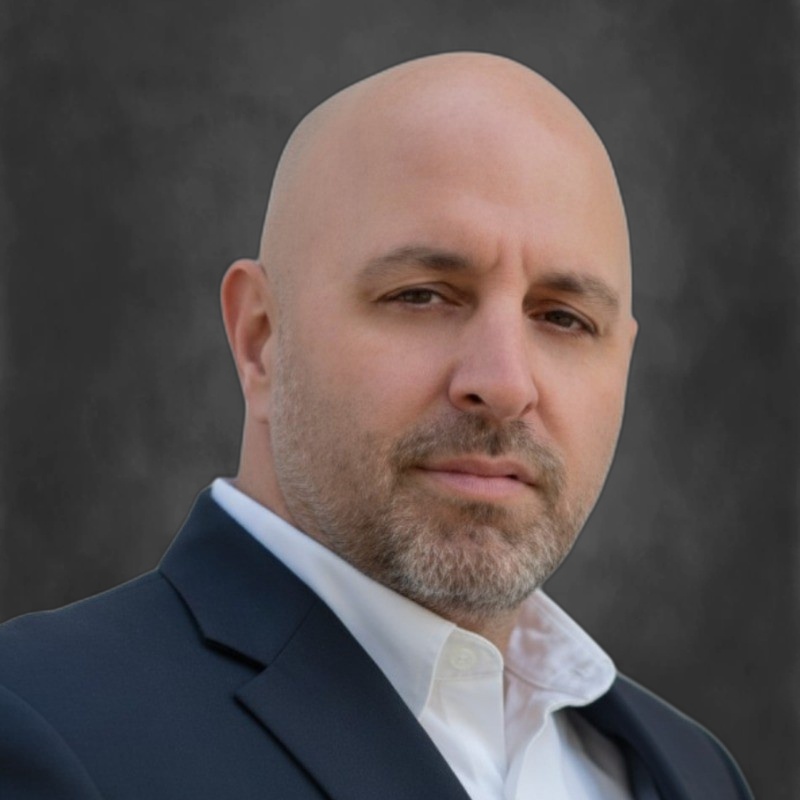
CEO/Co-Founder @ Oatmeal Health | AI Lung Cancer Screening | Almost Became a Doctor | Engineer | Follow to Share What I’ve Learned Along the Way
I help patients get the care they need earlier, preventing late-stage cancer.
That’s been the throughline across three companies and almost 20 years in healthcare. At ReferralMD, we fixed broken referral networks so patients didn’t fall through the cracks. At Oatmeal Health, it’s lung cancer: building the diagnostic and screening infrastructure so the 85% of cases caught too late get caught early instead.
Today as CEO of Oatmeal Health, I lead a team embedding AI into radiology workflows to turn routine lung CT scans into reimbursable cancer risk assessments. We partner with FQHCs to reach underserved communities, and with health systems and payers to make early detection economically sustainable. Think HeartFlow or Cleerly, but for lungs.
Between companies, I advised at Techstars and Plug and Play, mentoring founders building in digital health. That experience shaped how I think about what separates companies that ship from companies that stall: distribution, reimbursement, and clinical trust, not just technology.
I’m a CancerX alumnus, a 3x healthcare founder, and someone who believes the biggest problems in cancer aren’t scientific. They’re operational.
We’re hiring mission-driven builders at Oatmeal Health. If you want to work on something that matters, reach out.
When I’m not working, I’m traveling, mentoring, and keeping up with one very energetic husky. 🐾
Substack – The Oatmeal Bite:
Millions of patients get less care because of who they are, where they live, or how they look. I’m fighting to change that. CEO @OatmealHealth, a startup built for the underserved. The Oatmeal Bite: intel for clinicians, investors, and advocates.
Jonathan Govette
CEO of Oatmeal Health
Substack:
https://oatmealhealthjonathangovette.substack.com/