Share this article and save a life!
CMS said this drug pricing model would save $12 billion.
The final rule puts that number at $440 million. 💊
On September 30, CMS finalized the Global Benchmark for Efficient Drug Pricing Model, known as the GLOBE Model. According to the American Hospital Association, it is a mandatory Medicare payment model that replaces the domestic benchmark for manufacturer rebates under the Medicare Part B Inflation Rebate Program with one derived from international pricing.
In plain English: the U.S. is now benchmarking what drug companies owe Medicare against what those same drugs cost in other countries.
That is a big structural shift.
But here is the part most people are glossing over.
CMS originally estimated $12 billion in savings over the seven-year performance period. According to the AHA, the finalized model revised that estimate down to $440 million. That is not a rounding error. That is a 96% reduction in projected value before the model even launches.
🔹 The model applies to approximately 25% of all Original Medicare beneficiaries, limited to a randomly selected subset of geographic areas.
🔹 Biosimilars and their referenced biologics are excluded.
🔹 Orphan-only drugs, plasma-derived products, and certain cell and gene therapies are also excluded.
🔹 Manufacturers already participating in the GENEROUS Model are exempt, leaving only four manufacturers that CMS anticipates will be required to participate.
Four manufacturers. That is the scope of this mandatory rule.
I have a lot of respect for the policy intent here. Tying U.S. drug rebates to international pricing is directionally correct. Americans pay more for the same drugs than patients in other developed countries. That is not a new problem. It is a real one.
But when the stated rationale for a sweeping mandatory payment model shrinks by 96% between proposal and finalization, that is worth slowing down to understand.
What changed? Exclusions. Carve-outs for biosimilars, orphan drugs, cell and gene therapies. And the GENEROUS Model exemption pulling most manufacturers out entirely.
The result is a model that sounds transformational in the press release and covers four drug manufacturers in practice.
This is not unique to this administration or this rule. Healthcare policy has a long history of bold proposals getting carved down to near-irrelevance by the time they survive the comment period. That is the system working as designed, for better or worse.
What it means for the industry: watch how those four manufacturers respond, watch which geographic areas are selected, and watch whether CMS expands the scope after the performance period closes.
The GLOBE Model may ultimately be a proof of concept, not a solution. And proof of concepts in Medicare take a long time to scale.
👉 Follow Jonathan Govette, CEO of Oatmeal Health, for daily healthcare insights on LinkedIn. Deeper dives in The Oatmeal Bite on Substack: https://news.oatmealhealth.com
Share this article and save a life!
Author:
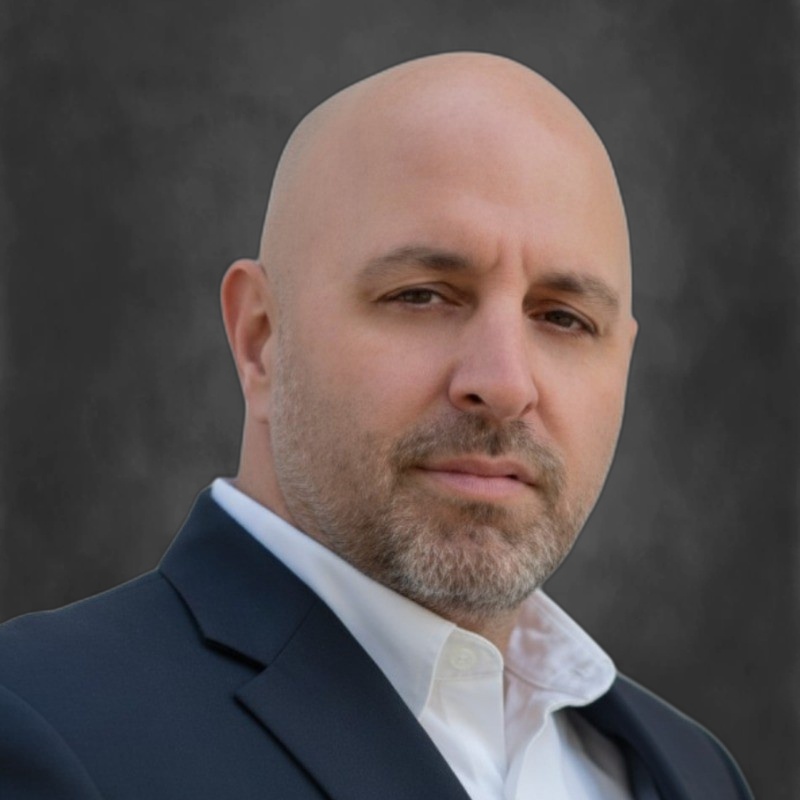
CEO/Co-Founder @ Oatmeal Health | AI Lung Cancer Screening | Almost Became a Doctor | Engineer | Follow to Share What I’ve Learned Along the Way
I help patients get the care they need earlier, preventing late-stage cancer.
That’s been the throughline across three companies and almost 20 years in healthcare. At ReferralMD, we fixed broken referral networks so patients didn’t fall through the cracks. At Oatmeal Health, it’s lung cancer: building the diagnostic and screening infrastructure so the 85% of cases caught too late get caught early instead.
Today as CEO of Oatmeal Health, I lead a team embedding AI into radiology workflows to turn routine lung CT scans into reimbursable cancer risk assessments. We partner with FQHCs to reach underserved communities, and with health systems and payers to make early detection economically sustainable. Think HeartFlow or Cleerly, but for lungs.
Between companies, I advised at Techstars and Plug and Play, mentoring founders building in digital health. That experience shaped how I think about what separates companies that ship from companies that stall: distribution, reimbursement, and clinical trust, not just technology.
I’m a CancerX alumnus, a 3x healthcare founder, and someone who believes the biggest problems in cancer aren’t scientific. They’re operational.
We’re hiring mission-driven builders at Oatmeal Health. If you want to work on something that matters, reach out.
When I’m not working, I’m traveling, mentoring, and keeping up with one very energetic husky. 🐾
Substack – The Oatmeal Bite:
Millions of patients get less care because of who they are, where they live, or how they look. I’m fighting to change that. CEO @OatmealHealth, a startup built for the underserved. The Oatmeal Bite: intel for clinicians, investors, and advocates.
Jonathan Govette
CEO of Oatmeal Health
Substack:
https://oatmealhealthjonathangovette.substack.com/