Share this article and save a life!
A law meant to protect patients is now funding a $1.3B arbitration machine. 🔍
Picture a 2021 hospital discharge. A patient gets their explanation of benefits, no surprise bill in sight. The No Surprises Act worked exactly as promised.
Six years later, that same law is powering something its authors never intended.
This week, Rep. Frank Pallone (D-N.J.), one of the original authors of the No Surprises Act, introduced the Lower Premiums, Faster Payments Act. His own verdict on the arbitration system he helped create: “clearly not working.”
The numbers behind that conclusion are worth sitting with.
According to Holland & Knight’s analysis of the announcement:
🔹 15 arbitration firms received $1.3 billion in fees in 2025 alone, compared with $885 million from 2022 through 2024 combined.
🔹 Those same firms awarded providers nearly $15 billion in 2025.
🔹 10 provider groups accounted for approximately 67 percent of the 2.5 million disputes submitted that year.
🔹 A Health Affairs analysis estimated the arbitration process generated $22.4 billion in total costs over four years.
🔹 The New York State Employee Plan attributed a 10 percent premium increase this year directly to arbitration awards.
Pallone’s framing is blunt: “A few bad actors, largely backed by private equity, are gaming the system, creating backlogs, delaying payments, and driving up premiums.”
So what does the bill actually do?
Starting January 1, 2028, the qualifying payment amount (QPA) would replace arbitration entirely as the out-of-network payment rate. The QPA would be anchored to each plan’s median contracted rate as of January 31, 2019, adjusted by the Consumer Price Index through 2027 and annually thereafter. Insurers would have 30 days to pay once the QPA applies. And the bill prohibits judicial review of the QPA methodology.
Beginning in 2028, the Departments of HHS, Labor, and Treasury would also be required to audit claims data from at least 25 plans and issuers each year, with findings made public.
Provider groups are already organized against it. Emergency physicians, anesthesiologists, and radiologists argue that letting insurers set the benchmark hands them structural leverage over payment rates. That tension is real and it is not going away.
But the counterargument is also real.
A system designed to protect patients has drifted into a volume-driven arbitration industry, concentrated among a small number of provider groups with the operational capacity to file at scale. The patients the law was meant to shield are paying for it through higher premiums, not surprise bills.
The bill still has to survive a fractured Congress and intense lobbying. However, the policy debate it forces is one the system has needed for some time.
When a law’s own author introduces legislation to dismantle the process he created, that is worth examining carefully, regardless of where you land on the solution.
👉 Follow Jonathan Govette, CEO of Oatmeal Health, for daily healthcare insights on LinkedIn. Deeper dives in The Oatmeal Bite on Substack: https://news.oatmealhealth.com
Share this article and save a life!
Author:
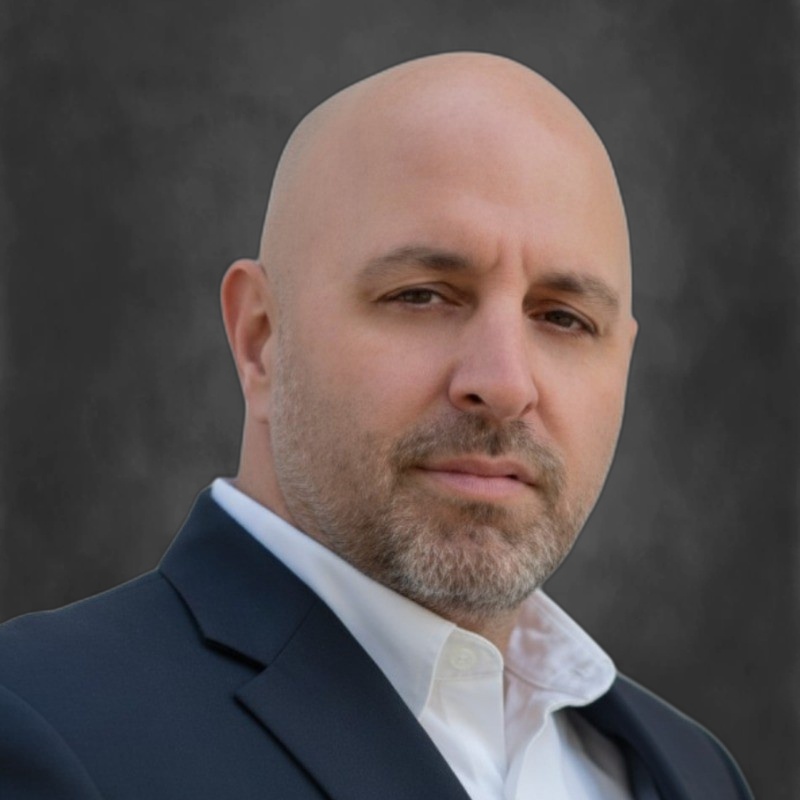
CEO/Co-Founder @ Oatmeal Health | AI Lung Cancer Screening | Almost Became a Doctor | Engineer | Follow to Share What I’ve Learned Along the Way
I help patients get the care they need earlier, preventing late-stage cancer.
That’s been the throughline across three companies and almost 20 years in healthcare. At ReferralMD, we fixed broken referral networks so patients didn’t fall through the cracks. At Oatmeal Health, it’s lung cancer: building the diagnostic and screening infrastructure so the 85% of cases caught too late get caught early instead.
Today as CEO of Oatmeal Health, I lead a team embedding AI into radiology workflows to turn routine lung CT scans into reimbursable cancer risk assessments. We partner with FQHCs to reach underserved communities, and with health systems and payers to make early detection economically sustainable. Think HeartFlow or Cleerly, but for lungs.
Between companies, I advised at Techstars and Plug and Play, mentoring founders building in digital health. That experience shaped how I think about what separates companies that ship from companies that stall: distribution, reimbursement, and clinical trust, not just technology.
I’m a CancerX alumnus, a 3x healthcare founder, and someone who believes the biggest problems in cancer aren’t scientific. They’re operational.
We’re hiring mission-driven builders at Oatmeal Health. If you want to work on something that matters, reach out.
When I’m not working, I’m traveling, mentoring, and keeping up with one very energetic husky. 🐾
Substack – The Oatmeal Bite:
Millions of patients get less care because of who they are, where they live, or how they look. I’m fighting to change that. CEO @OatmealHealth, a startup built for the underserved. The Oatmeal Bite: intel for clinicians, investors, and advocates.
Jonathan Govette
CEO of Oatmeal Health
Substack:
https://oatmealhealthjonathangovette.substack.com/