
HRSA FY2026 SAC Grant Changes
HRSA just revolutionized how FQHCs compete for grant funding. The FY2026 Service Area Competition grants dropped this week with game-changing updates that signal where community health is heading. Here's what's different: 📋 Project periods extended from 3 to 4 years 📋 New narrative requirements on nutrition and chronic disease management 📋 Cancer screening now a core priority area 📋 Mental health integration elevated to key focus 📋 Community characteristics form completely eliminated Application opens February 28, 2026. But here's what caught my attention: HRSA isn't just asking FQHCs to treat more patients. They're demanding comprehensive prevention strategies. Nutrition counseling, cancer screening protocols, chronic disease education, these aren't add-ons anymore. They're requirements. This shift makes perfect sense when you consider that ...
BrainIAC Revolution in Neuroimaging
One brain scan, seven diagnoses. This changes everything. Mass General Brigham just dropped BrainIAC on February 5th, and it's not your typical radiology AI. This isn't another single-task algorithm that spots one thing really well. BrainIAC analyzes a single brain MRI and delivers multiple complex assessments: • Estimates your "brain age" • Predicts dementia risk • Detects brain tumor mutations • Predicts brain cancer survival • And three more clinical applications Trained on 49,000 brain MRI scans, it uses self-supervised learning to understand both healthy and abnormal brain patterns without needing labeled data for every condition. The kicker? It outperformed conventional task-specific AI frameworks across all seven applications. Think about what this means for community hospitals and FQHCs. Instead of ...
Cognizant-Palantir AI Healthcare Partnership
The most overlooked healthcare partnership just dropped. While everyone's focused on ChatGPT and consumer AI, Cognizant and Palantir quietly announced something that could fundamentally reshape how health systems operate. Here's what happened: On February 5, these two giants revealed they're combining forces. Palantir's Foundry and AIP platforms will integrate directly with Cognizant's TriZetto systems, which already process claims for 180+ million Americans. Why this matters more than you think: 🔹 TriZetto touches 60% of US healthcare transactions 🔹 Palantir's tech already powers critical government operations 🔹 Together, they're building AI for regulated environments, not chatbots Think about it: Most AI in healthcare fails because it can't navigate compliance, security, and legacy systems. This partnership attacks all three problems simultaneously. The ...
HRSA Opens Major FQHC Grant Opportunities
$750K per year for 4 years: HRSA's massive FQHC grant wave is here. After years of limited federal opportunities, HRSA just dropped the funding bombshell FQHCs have been waiting for. Here's what's coming down the pipeline: 📍 Rural Communities Opioid Response (RCORP) • $750,000 per year for 4 years • 80 awards expected • Zero cost-sharing requirement • Applications due April 22, 2026 📍 Ryan White Part C Capacity Building • $115,000 per award • 60 awards expected • Perfect entry point (no existing Ryan White patients required) • Applications due May 1, 2026 📍 MAHA Elevate Program • $100 million total funding • Up to 30 cooperative agreements • First cohort launches September 2026 Why this matters now: FQHCs ...
Agentic AI Licensing Revolution
Healthcare AI agents just got their first licensing platform. And it changes everything about how we think about automation. MediKarma launched the industry's first "agentic AI" licensing system this week, allowing autonomous agents to operate independently in wellness coaching, disease management, and data operations. Think about that for a second. We're not talking about AI assistants anymore. We're talking about licensed AI practitioners. 🤖 The shift is profound: Traditional AI: Suggests next steps, flags issues, assists doctors Agentic AI: Makes decisions, manages care plans, operates autonomously This isn't just another chatbot upgrade. It's the healthcare equivalent of going from cruise control to self-driving cars. Here's what makes this revolutionary: • Autonomous disease management without constant human oversight • AI agents ...
AI Mammography Revolution in Sweden
Sweden just proved AI can catch 29% more breast cancers. And it's cutting radiologist workload nearly in half. The MASAI trial results are in, published in The Lancet this February. Over 100,000 women screened. The largest randomized controlled trial of AI in mammography ever conducted. Here's what they found: 📊 29% increase in cancer detection 🎯 12% reduction in interval cancers (the ones that show up between screenings) ⏱️ 44% reduction in radiologist reading time ✅ No increase in false positives (1.5% vs 1.4%) But here's what makes this revolutionary: The AI caught mostly small, lymph node-negative invasive cancers. The kind that are treatable when found early. The kind that save lives. Dr. Kristina Lång from Lund University made a ...
Oracle’s AI Platform Unlocks 129M Patient Records
129 million patient records just became accessible to pharma AI. Oracle dropped a bombshell this week. Their new Life Sciences AI Data Platform, announced January 29, connects something unprecedented: real-world data from 129 million de-identified EHR records directly to pharmaceutical R&D teams. Think about what this means: • Clinical trials could identify eligible patients in days, not months • Drug safety signals detected years earlier through real-world evidence • Rare disease research finally has the scale it needs • Post-market surveillance happens in real-time, not retrospectively But here's what makes me pause. We're handing massive amounts of patient data, even de-identified, to an industry that hasn't always prioritized patient interests first. Yes, the potential is enormous. Finding the next breakthrough ...
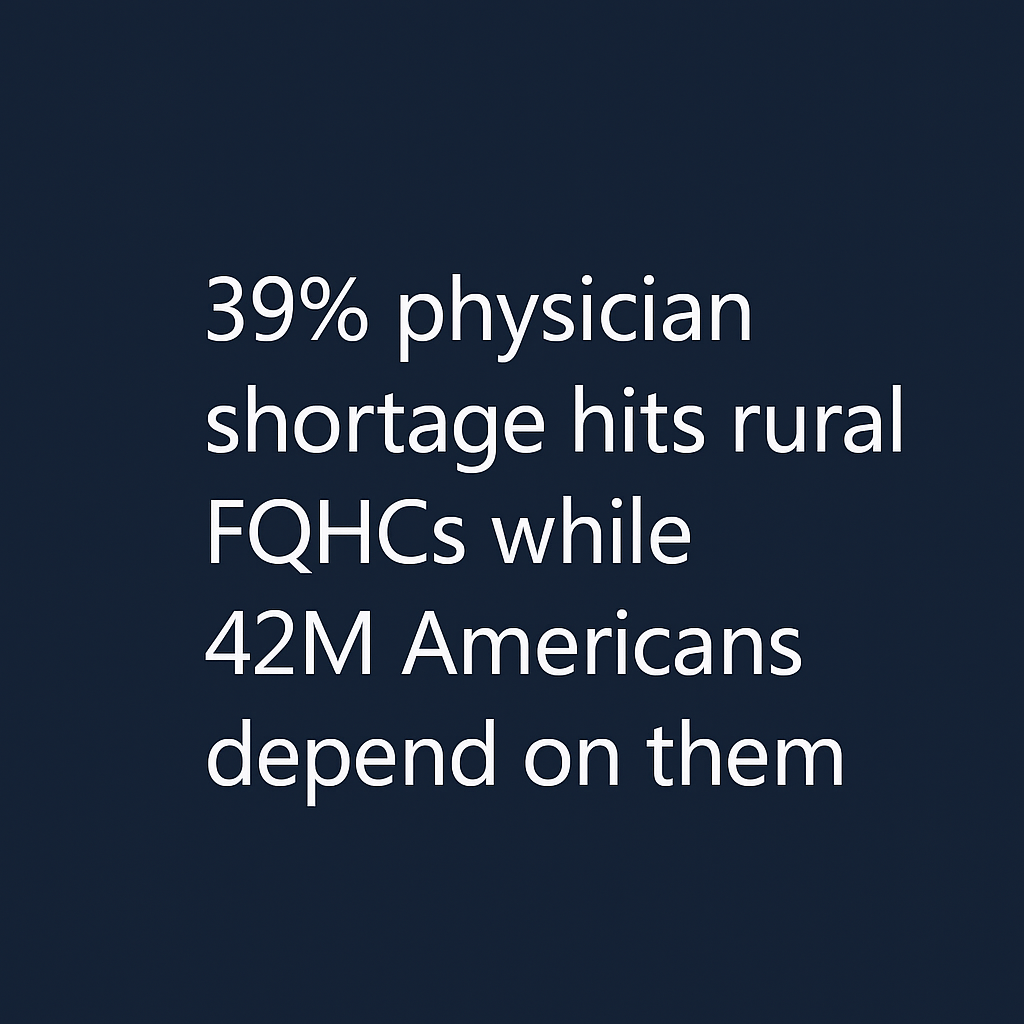
FQHC Workforce Crisis Reaches Breaking Point
40% of FQHCs can't fill positions for 6+ months. This is unsustainable. New NACHC data just dropped, and the numbers are staggering. Rural FQHCs face a 39% primary care physician shortfall RIGHT NOW. Not in 2030. Not in 2035. Today. 92% of rural counties are designated as Health Professional Shortage Areas. 199 counties have ZERO physicians. Yet these same FQHCs serve 42 million Americans who have nowhere else to go. The math doesn't work anymore. HRSA projects physician supply will meet only 68% of rural demand by 2037. Meanwhile, FQHCs battle 32% annual turnover rates while competing against tech companies offering double the salary and half the stress. Here's what's actually happening on the ground: • Nurse practitioners are becoming ...
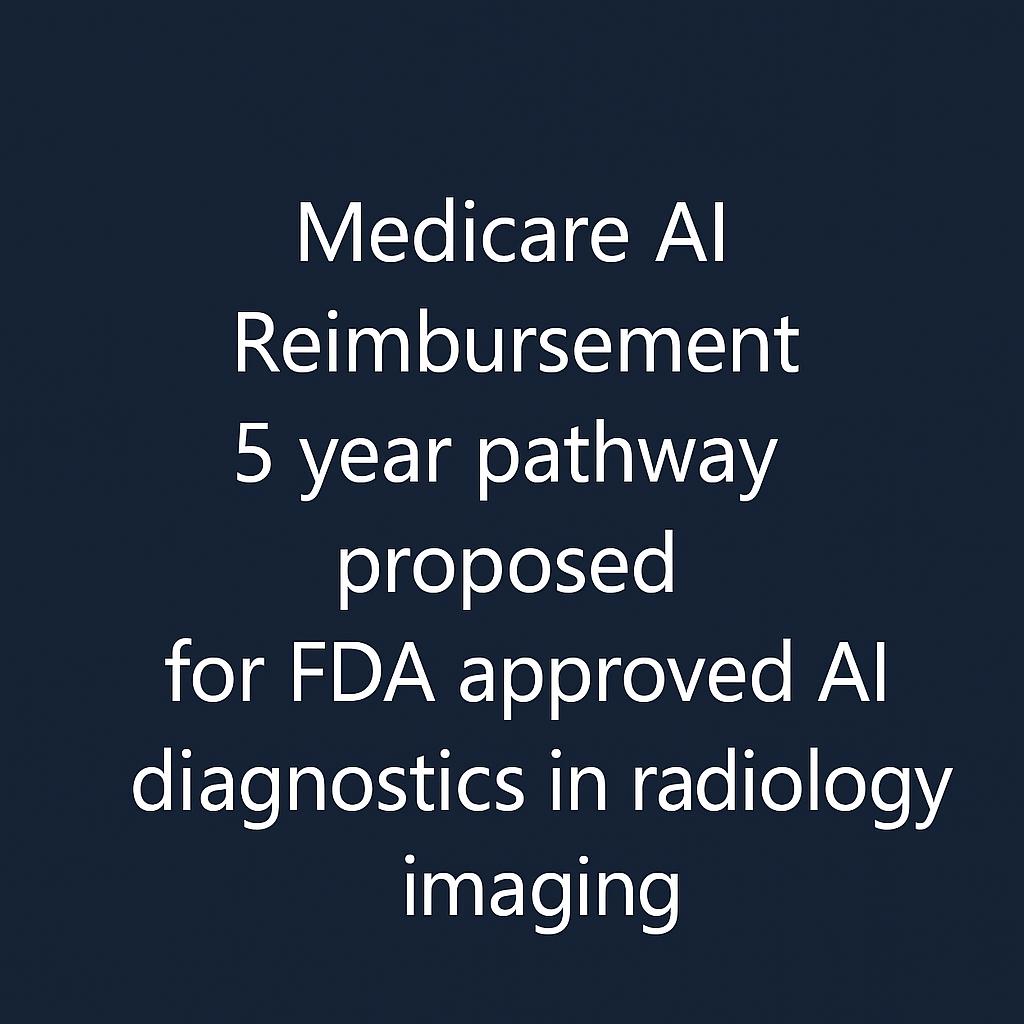
Medicare AI Reimbursement Breakthrough
Medicare might finally pay for AI that catches cancer earlier. Right now, AI tools that can spot tumors months before human eyes can see them sit unused in hospitals across America. Why? Medicare won't pay for them. But that could change. The bipartisan Health Tech Investment Act, now in Congress, proposes something radical: a 5-year reimbursement pathway for FDA-approved AI diagnostics. 🎯 Think about what this means: • AI that detects pancreatic cancer 3 years early (Mayo Clinic's tool) • Algorithms diagnosing lung nodules in underserved communities with tools like Oatmeal Health that reduces false positives and false negitives • Breast cancer screening that reduces false positives by 40% • Heart conditions found on routine ECGs, years before symptoms These ...