Share this article and save a life!
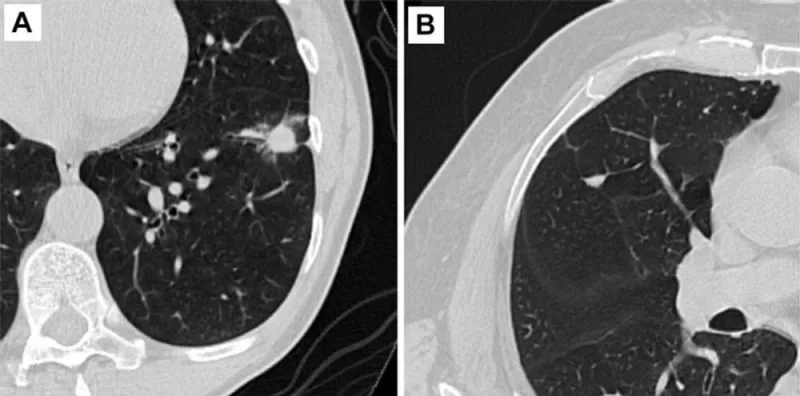
For my non-radiology colleagues, which nodule is which is worrisome? A or B? Lung cancer found early, 10mm or less, improves long-term survival, per Dr. Henschke’s most recent study.
“What we present here is the 20-year follow-up on participants in our screening program that were diagnosed with lung cancer and subsequently treated,” Dr. Claudia Henschke of Icahn School of Medicine at Mount Sinai
“The key finding is that even after this long a time interval they are not dying of their lung cancer.”
The study found that the 20-year survival rate was 80% for the 1,285 I-ELCAP participants who were diagnosed with early-stage lung cancer. The survival rate for both the 139 participants with nonsolid cancerous lung nodules and the 155 participants with nodules of part-solid consistency was 100%.
For the 991 participants with solid nodules, the survival rate was 73%. Lung cancer survival for clinical Stage IA participants was 86%, regardless of consistency. For participants with pathologic Stage IA cancers of 10 mm or less, the 20-year survival rate was 92%.
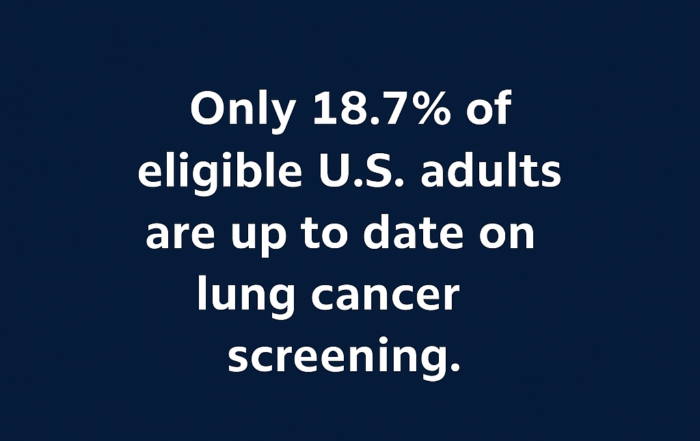
The findings demonstrate the importance of routine and early screening.
“Ultimately, anyone interested in being screened needs to know that if they are unfortunate enough to develop lung cancer, that it can be cured if found early,” Dr. Henschke said.
For those of you playing along, A is the worrisome nodule with the spiculated margins.
A=Malignant, cancer
B=Benign, probably a lymph node
Improving lung cancer screening efficiency and compliance for all patients is the Oatmeal Health mission. With a new #HEDIS measure on the horizon from NCQA, we would like to help FQHCs be prepared.
We are ready to help. Please send jonathan@oatmealhealth.com a note if you’d like to learn more about Oatmeal Health.
#primarycare #radiology #lungcancerscreening #FQHC
Link to #RSNA article: https://lnkd.in/g6XpWh2d
Radiological Society of North America (RSNA)
Co-Authors:
David Yankelevitz, M.D.
Daniel M. Libby
James Smith, M.D.
Mark Pasmantier, M.D.
Rowena Yip, MPH
Share this article and save a life!
Author:

CEO/Co-Founder @ Oatmeal Health | AI Lung Cancer Screening | Almost Became a Doctor | Engineer | Follow to Share What I’ve Learned Along the Way
I help patients get the care they need earlier, preventing late-stage cancer.
That’s been the throughline across three companies and almost 20 years in healthcare. At ReferralMD, we fixed broken referral networks so patients didn’t fall through the cracks. At Oatmeal Health, it’s lung cancer: building the diagnostic and screening infrastructure so the 85% of cases caught too late get caught early instead.
Today as CEO of Oatmeal Health, I lead a team embedding AI into radiology workflows to turn routine lung CT scans into reimbursable cancer risk assessments. We partner with FQHCs to reach underserved communities, and with health systems and payers to make early detection economically sustainable. Think HeartFlow or Cleerly, but for lungs.
Between companies, I advised at Techstars and Plug and Play, mentoring founders building in digital health. That experience shaped how I think about what separates companies that ship from companies that stall: distribution, reimbursement, and clinical trust, not just technology.
I’m a CancerX alumnus, a 3x healthcare founder, and someone who believes the biggest problems in cancer aren’t scientific. They’re operational.
We’re hiring mission-driven builders at Oatmeal Health. If you want to work on something that matters, reach out.
When I’m not working, I’m traveling, mentoring, and keeping up with one very energetic husky. 🐾
Substack – The Oatmeal Bite:
Millions of patients get less care because of who they are, where they live, or how they look. I’m fighting to change that. CEO @OatmealHealth, a startup built for the underserved. The Oatmeal Bite: intel for clinicians, investors, and advocates.
Jonathan Govette
CEO of Oatmeal Health
Substack:
https://oatmealhealthjonathangovette.substack.com/