Share this article and save a life!
The cancer cure hiding in plain sight is not a drug. 🔬
It is a free at-home test that takes minutes to complete.
According to ScienceDaily, a new study published in JAMA Network Open by researchers at Karolinska Institutet and Umeå University found that people who participated in colorectal cancer screening had a 43% lower risk of dying from the disease.
The study tracked 376,511 people for up to 14 years through the Stockholm-Gotland screening program.
That is not a small signal. That is one of the most compelling cancer survival findings of the year.
Here is what the numbers actually show:
– Receiving an invitation to screening alone was linked to a 26% lower risk of dying from colorectal cancer
– Among people who actually participated, the risk was 43% lower
– Over the full follow-up period, researchers recorded 1,668 deaths from colorectal cancer
– Around one third of people invited never submitted a sample, even though the test is free
Read that last line again.
One third of people handed a free, potentially life-saving test chose not to use it.
🎯 This is the real access problem in cancer screening.
It is not always geography. It is not always cost. Sometimes it is trust, literacy, awareness, and the absence of a system that follows up with the people who fall through the cracks.
At Oatmeal Health, this is the problem we work on every single day. We focus on lung cancer screening in underserved communities, but the dynamic is identical. The tool exists. The evidence is overwhelming. The gap is in closing the loop between an invitation and actual participation.
Johannes Blom, the study’s corresponding author at Karolinska Institutet, said it plainly: screening can actually save lives, and the data now shows that with 14 years of follow-up behind it.
The Participation Gap Framework, three questions every health system should ask:
1. Who did we invite?
2. Who actually completed the test?
3. What happened to everyone in between?
If you are building care delivery or screening programs, bookmark this framework. It is where the survival delta lives.
💡 The mortality gap between those invited and those who participated is 17 percentage points. That gap is not a biology problem. It is an outreach, trust, and follow-up problem.
We have the tools. We have the evidence. What we need now is the will to close the loop for every single patient, not just the ones who already show up.
Because a test that sits unopened on a kitchen counter saves no one.
👉 Follow Jonathan Govette, CEO of Oatmeal Health, for daily healthcare insights on LinkedIn. Deeper dives in The Oatmeal Bite on Substack: https://news.oatmealhealth.com
Share this article and save a life!
Author:
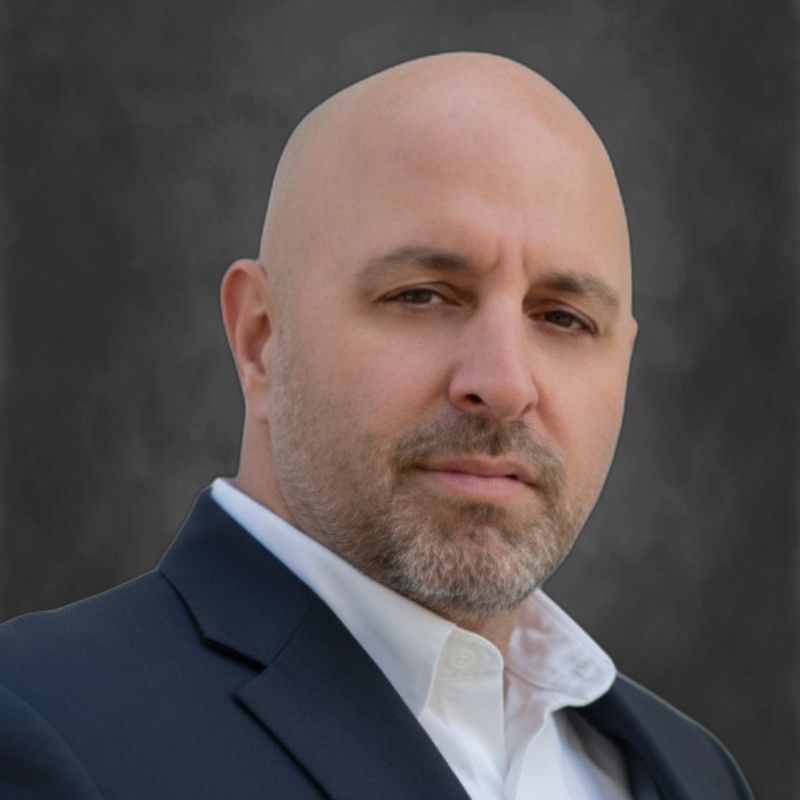
CEO/Co-Founder @ Oatmeal Health | AI Lung Cancer Screening | Almost Became a Doctor | Engineer | Follow to Share What I’ve Learned Along the Way
I help patients get the care they need earlier, preventing late-stage cancer.
That’s been the throughline across three companies and almost 20 years in healthcare. At ReferralMD, we fixed broken referral networks so patients didn’t fall through the cracks. At Oatmeal Health, it’s lung cancer: building the diagnostic and screening infrastructure so the 85% of cases caught too late get caught early instead.
Today as CEO of Oatmeal Health, I lead a team embedding AI into radiology workflows to turn routine lung CT scans into reimbursable cancer risk assessments. We partner with FQHCs to reach underserved communities, and with health systems and payers to make early detection economically sustainable. Think HeartFlow or Cleerly, but for lungs.
Between companies, I advised at Techstars and Plug and Play, mentoring founders building in digital health. That experience shaped how I think about what separates companies that ship from companies that stall: distribution, reimbursement, and clinical trust, not just technology.
I’m a CancerX alumnus, a 3x healthcare founder, and someone who believes the biggest problems in cancer aren’t scientific. They’re operational.
We’re hiring mission-driven builders at Oatmeal Health. If you want to work on something that matters, reach out.
When I’m not working, I’m traveling, mentoring, and keeping up with one very energetic husky. 🐾
Substack – The Oatmeal Bite:
Millions of patients get less care because of who they are, where they live, or how they look. I’m fighting to change that. CEO @OatmealHealth, a startup built for the underserved. The Oatmeal Bite: intel for clinicians, investors, and advocates.
Jonathan Govette
CEO of Oatmeal Health
Substack:
https://oatmealhealthjonathangovette.substack.com/