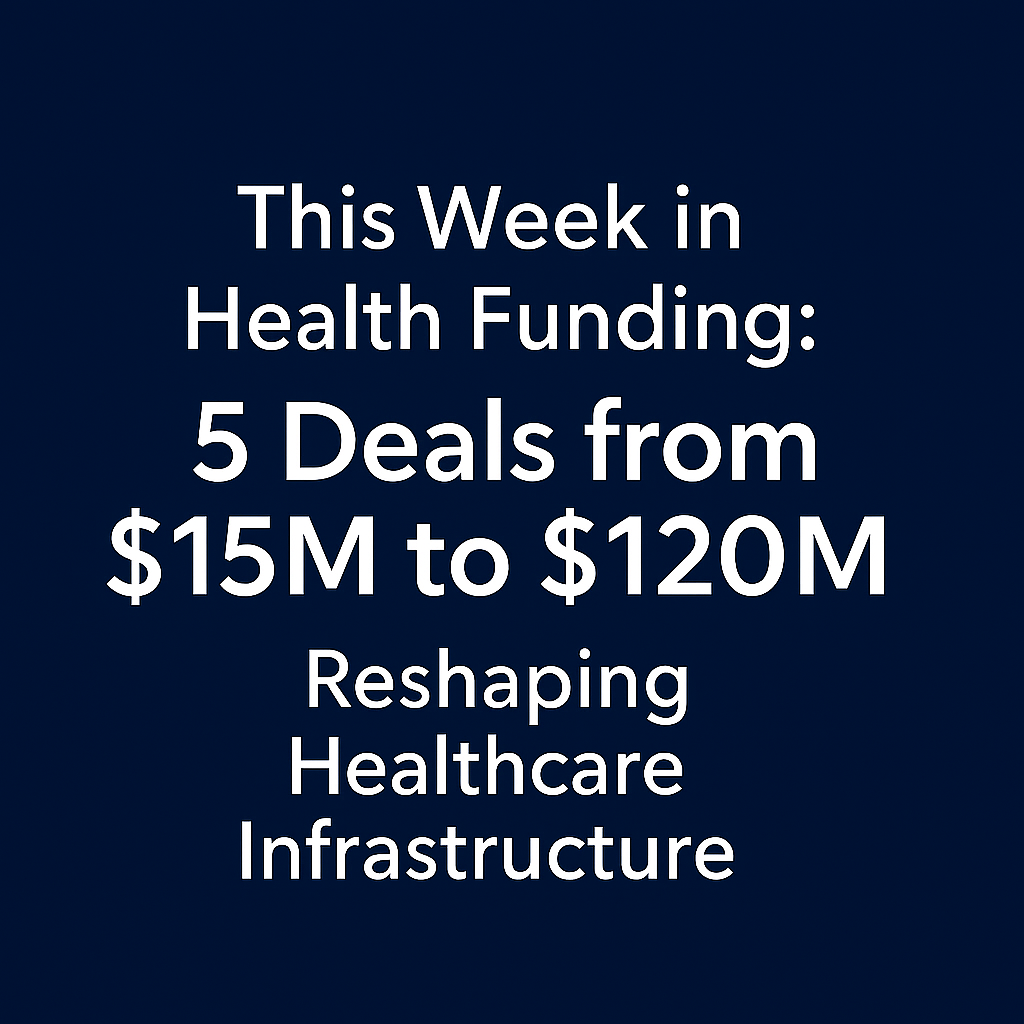
This Week in Health Funding: 5 Deals
A physician sits in a reading room in Cleveland. Before she touches a single chart, an AI agent has already triaged her queue, flagged a coronary risk from an incidental scan, and routed three patients to telemedicine. That is not a pilot. That is production in 2026. 🔥 This week reminded me why I do what I do. Healthcare's biggest, most stubborn problems are finally attracting real capital at real scale. Every verified deal from the week of July 21, 2026: Candid Health: $120M Series D, led by Sixth Street Growth. Automated medical billing and reimbursement. Tripled valuation since Series C. Over 200 healthcare orgs. Pearl Health: $110M. AI platform helping primary care physicians deliver better outcomes at lower cost ...
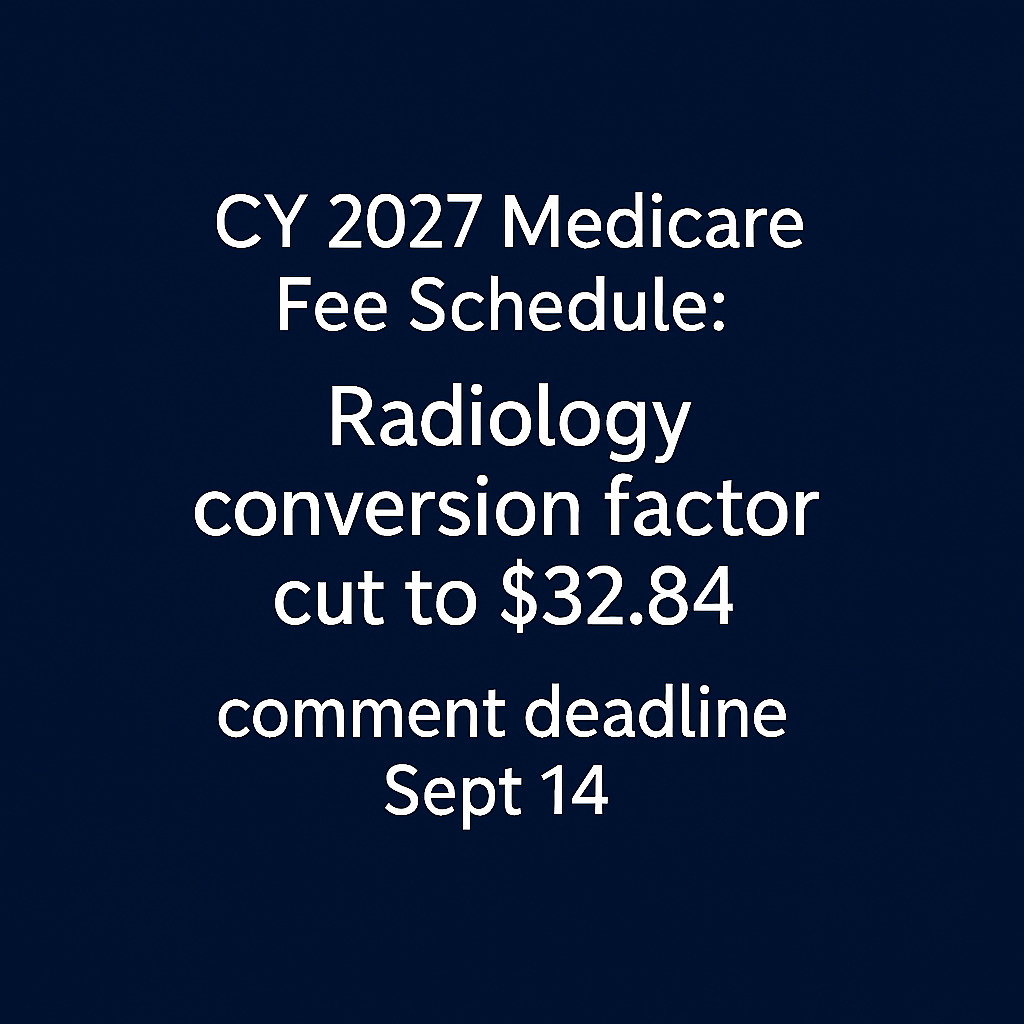
CY2027 MPFS: Radiology Pay Cut Framework
CMS just cut radiology pay again. Nobody is surprised. That is the problem. 📉 When a payment cut lands and the collective response is a shrug, it means the erosion has become the baseline. On July 14, 2026, CMS released the CY 2027 Medicare Physician Fee Schedule proposed rule. According to MD Revenue Group, if finalized, these policies take effect January 1, 2027. The 60-day public comment window closes September 14, 2026. This is not a small administrative tweak. It is another compounding hit on a system the American Medical Association has already documented fell 29% in inflation-adjusted terms between 2001 and 2026. Here is what is actually in this rule. 🔢 THE CY 2027 MPFS RADIOLOGY REIMBURSEMENT BREAKDOWN Save ...
CMS Defers $867M in CA Medicaid Funds
$867,465,287. That is the size of the federal Medicaid deferral CMS just dropped on California. 🚨 Not a rumor. Not a threat. A signed letter to California State Medicaid Director Tyler Sadwith dated July 21, 2026. According to FQHC Talent, CMS withheld $709,311,454 in federal medical assistance and $158,153,833 in administrative funds, structured as a negative grant award for Q2 FY2026. Here is what you need to know before you panic, or before you dismiss it. 💡 This is NOT a direct cut to your health center. No FQHC is named anywhere in the letter. Nothing in it changes PPS rates or health-center payment methodology. That matters. A lot of people in our space are reading headlines and drawing the ...
Congress Funds Lung Imaging AI for Vets
Congress just wrote a $25M check for lung imaging AI. Read that again. 🫁 I sat with that number for a while. Not a research grant. Not a pilot buried in an omnibus. A direct, line-item appropriation for a defined category of FDA-cleared imaging software. The consensus right now is that radiology AI has a reimbursement problem. The standard playbook says: get FDA cleared, then fight for a CMS payment code, then wait for utilization to catch up. That fight takes years. Most companies run out of runway before the code lands. Here is my read: H.R. 9666 just opened a third door. And almost no one is talking about it. 📋 What the bill actually does On July 14, ...
Screening Criteria Miss 65% of Lung Cancer
CMO, can you defend a guideline that would have missed 65% of lung cancer patients? 🔬 Because that is exactly what a new study in JAMA Network Open just showed. Researchers looked at 89,900 patients diagnosed with lung cancer in South Korea from 2013 to 2018. Then they asked one simple question: how many of these people would have qualified for screening under current international guidelines, including those from the USPSTF, ACS, and NCCN? The answer should stop every screening program leader in their tracks. 📊 Here is what the data actually showed: - 65% of lung cancer patients would NOT have been eligible for screening under international guidelines - 44% had no smoking history at all - Eligibility by ...
AI Won’t Fix Healthcare’s Broken Incentives
The AI doctor debate is asking the wrong question entirely. July 12, 2026. Marc Andreessen posts on X that AI is already a better doctor than 99.99% of human doctors. A Silicon Valley benchmark goes viral. Everyone picks a side. Then Mark Cuban replies. And his reply cuts straight to the thing nobody wants to talk about. 🎯 Cuban's point was not that AI cannot read an MRI or catch a diagnosis a tired physician missed at 2 a.m. Nobody serious is arguing that. His point was about what happens after the AI gives its answer. Here is the reality he described, and every word of it is accurate: - Insurers are already using AI to find ways to manipulate ...
Neko Health $700M Series C
The US healthcare system profits from sickness. Someone just raised $700M to bet against it. 🏥 Everyone assumes the incumbents will lead the prevention revolution. They won't. They can't. The incentive structure won't let them. Neko Health just closed a $700 million Series C, led by Lightspeed Venture Partners and co-led by O.G. Venture Partners, at a valuation of nearly $7 billion. That is up roughly 4x from early 2025. The company was co-founded by Daniel Ek and Hjalmar Nilsonne, and it builds AI-powered, non-invasive preventive health scans combining proprietary sensors, blood analysis, and clinician consultations to detect health risks early. This is not a software play. Neko owns the full stack: hardware, software, and the clinic itself. Here is ...
Corner Health: NPs as Entrepreneurs
78% of Nurse Practitioners want to start their own businesses. 🔥 Almost none of them ever did, because the system made it nearly impossible. That is the problem Corner Health was built to solve. Co-founders Lava Sunder and Anne Gifford spent years talking to NPs. What they found was consistent: NPs are wildly entrepreneurial, deeply capable, and completely constrained by the administrative weight of running a practice. Billing. Insurance. Scheduling. Lab orders. Referrals. Patient communication. Without a team behind them, none of it was manageable alone. Corner Health eliminates that constraint. The company is not a consumer brand. It is an operating layer, one that lets NPs function as solo practitioners without hiring a single support staff member. Corner's AI ...
Hospital Crisis Hits Urban Safety-Net Hard
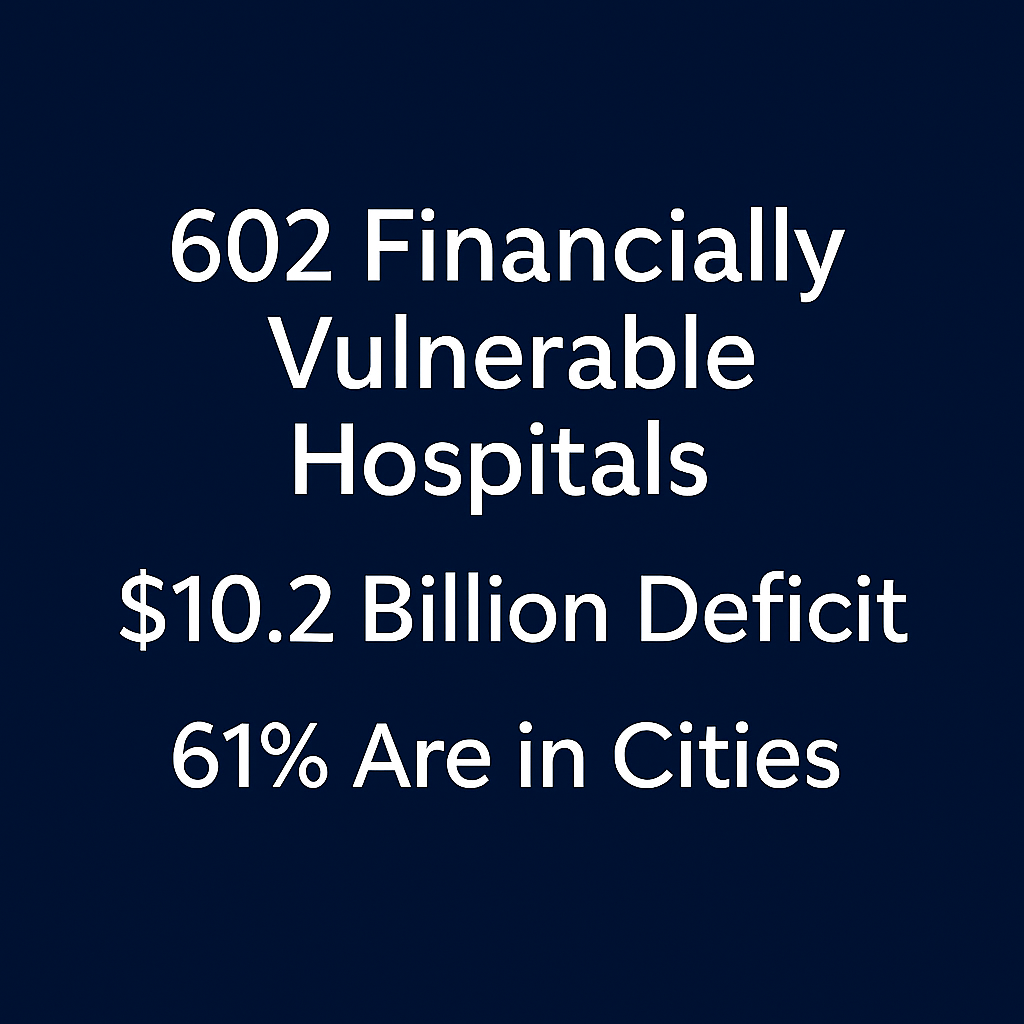
61 percent of America's most financially vulnerable hospitals are in cities. 🏙️ That number stopped me cold when I read it. Everyone in this space has been told the same story for the past year. The cuts hurt rural hospitals. Rural communities. Rural patients. And yes, that is true and it is devastating. But new research cited by The American Prospect is cracking that narrative open. National Nurses United identified 602 financially vulnerable hospitals across 47 states. Together, they are running an aggregated deficit of about $10.2 billion right now. When the full impact of the One Big Beautiful Bill Act hits, researchers project that deficit will balloon to between $15.4 billion and $17.9 billion. ⚠️ And 366 of those ...