Share this article and save a life!
56 million older adults in this country live with chronic disease.
Heart failure. Hypertension. Diabetes. Conditions that demand daily attention, medication adjustments, and real-time clinical judgment.
We do not have enough clinicians to deliver that. Not even close.
Cadence is betting it can close that gap with AI.
On June 23, the New York-based startup announced a $100 million Series C led by Spark Capital. Thrive Capital, General Catalyst, Coatue, and B Capital joined the round, alongside the venture arms of Corewell Health, Memorial Hermann, and Duke Health. Total funding now sits at $241 million. Valuation: $1.23 billion. 🦄
Here is what makes Cadence different from a standard remote monitoring play.
Most RPM companies give clinicians a dashboard. More data. More alerts. More things to triage.
Cadence flips that entirely.
Patients go home with connected devices that continuously track vitals. AI agents monitor the data, surface risks, and adjust medications in real time. The platform uses predictive models to flag stroke and heart attack risk before events happen. Clinicians are not reading every data point. They step in for the decisions that actually require a human.
Cadence calls itself a clinical service, not a monitoring platform. That distinction matters. It charges insurers a monthly fee for remote patient care, not a per-alert or per-device fee. The model is designed to be accountable to outcomes.
And the outcomes are real. Published in Mayo Clinic Proceedings earlier this year. 🏥
A 230% increase in heart failure patients on guideline-directed medical therapy. A 70% relative increase in blood pressure control. A 27% reduction in hospital admissions. $1,302 per-patient annual reduction in total cost of care. And for every dollar Medicare spends, Cadence returns more than $3.
Those numbers hold up across rural and underserved communities too, which matters to anyone thinking seriously about health equity.
I think about the populations we serve at Oatmeal Health. The patients at FQHCs. The people who fall through the cracks of a system that was not built to reach them. Chronic disease and cancer risk often live in the same zip codes. The same bodies. The same families.
Tools that bring consistent, proactive clinical care into the home are not just convenient. They are often the only shot some patients get.
**When AI handles the routine, clinicians can finally focus on the irreplaceable.**
For the CMOs and Chief Medical Officers thinking about chronic care strategy right now: if your current RPM program is generating alerts without generating outcomes, that is a model problem, not a technology problem. What is your honest read on whether your team has the capacity to act on the monitoring data you are already collecting?
👉 Follow for daily healthcare insights. Deeper dives in The Oatmeal Bite on Substack.
Share this article and save a life!
Author:
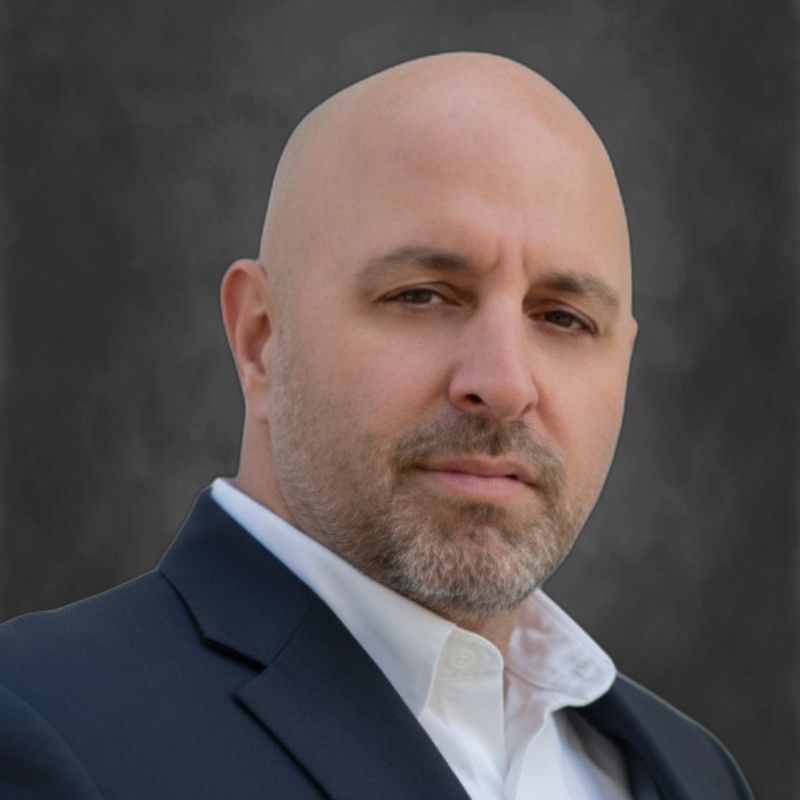
CEO/Co-Founder @ Oatmeal Health | AI Lung Cancer Screening | Almost Became a Doctor | Engineer | Follow to Share What I’ve Learned Along the Way
I help patients get the care they need earlier, preventing late-stage cancer.
That’s been the throughline across three companies and almost 20 years in healthcare. At ReferralMD, we fixed broken referral networks so patients didn’t fall through the cracks. At Oatmeal Health, it’s lung cancer: building the diagnostic and screening infrastructure so the 85% of cases caught too late get caught early instead.
Today as CEO of Oatmeal Health, I lead a team embedding AI into radiology workflows to turn routine lung CT scans into reimbursable cancer risk assessments. We partner with FQHCs to reach underserved communities, and with health systems and payers to make early detection economically sustainable. Think HeartFlow or Cleerly, but for lungs.
Between companies, I advised at Techstars and Plug and Play, mentoring founders building in digital health. That experience shaped how I think about what separates companies that ship from companies that stall: distribution, reimbursement, and clinical trust, not just technology.
I’m a CancerX alumnus, a 3x healthcare founder, and someone who believes the biggest problems in cancer aren’t scientific. They’re operational.
We’re hiring mission-driven builders at Oatmeal Health. If you want to work on something that matters, reach out.
When I’m not working, I’m traveling, mentoring, and keeping up with one very energetic husky. 🐾
Substack – The Oatmeal Bite:
Millions of patients get less care because of who they are, where they live, or how they look. I’m fighting to change that. CEO @OatmealHealth, a startup built for the underserved. The Oatmeal Bite: intel for clinicians, investors, and advocates.
Jonathan Govette
CEO of Oatmeal Health
Substack:
https://oatmealhealthjonathangovette.substack.com/