Share this article and save a life!
I read that quote three times before it landed. 🧠
Health Secretary Robert F. Kennedy Jr. told attendees at the Make America Healthy Again Summit this week that AI can provide “a second opinion that is much better informed than any doctor in the country.”
The summit was sponsored by OpenAI and Anthropic.
Let that sink in for a second.
This week, six of the most powerful physician organizations in the country issued a formal joint statement pushing back. According to Chief Healthcare Executive, those six groups are:
🔹 American Medical Association
🔹 American Academy of Family Physicians
🔹 American Academy of Pediatrics
🔹 American College of Obstetricians and Gynecologists
🔹 American College of Physicians
🔹 American College of Surgeons
Their statement did not mince words: “Statements suggesting AI is inherently better informed than physicians, or that physicians cannot be trusted to make clinical decisions without first consulting this technology, diminish physician expertise and risk undermining patients’ trust.”
They are right. But I want to go further.
🔥 The dangerous part of this debate is not the technology. It is the framing.
When the nation’s top health official says AI outperforms doctors at a summit bankrolled by the very companies building that AI, it is not a neutral observation. It is a market signal dressed up as public health leadership. It tells patients to distrust their physicians. It tells payers to find new ways to justify denials. It tells health systems to cut staff and call it innovation.
Dr. John Whyte, CEO of the AMA, put it cleanly on LinkedIn this week: “Clinical performance is only part of the equation. Performing medical tasks well is not the same as practicing medicine well.”
That line deserves to be printed and posted in every boardroom rushing to automate care.
Now here is the counterpoint I take seriously. Dr. Ezekiel Emanuel co-authored a JAMA paper arguing that autonomous AI “will likely be ready to be deployed for real-world cognitive medical tasks in some, maybe many, workflows by 2030.” That is a credible claim from a credible scholar. The evidence that AI excels on benchmarks is real.
But benchmarks are not patients.
⚡ And here is what actually matters: roughly four out of five doctors are already using AI, according to the article. The adoption is happening. The question is never AI versus no AI. The question is who controls the decision and who bears the consequences when it is wrong.
At Oatmeal Health, we work in lung cancer screening, a space where AI is genuinely saving lives by catching nodules earlier. I am not anti-AI. I am anti-hype that erodes trust without a system of accountability behind it.
When a machine makes the wrong call and a patient loses coverage or misses a diagnosis, no AI model loses its license. No algorithm faces liability. The doctor does. That asymmetry matters enormously.
The six societies are not fighting technology. They are fighting a narrative that removes accountability from the human beings who still have to live with the outcomes.
That fight is worth having.
👉 Follow Jonathan Govette, CEO of Oatmeal Health, for daily healthcare insights on LinkedIn. Deeper dives in The Oatmeal Bite on Substack: https://news.oatmealhealth.com
Share this article and save a life!
Author:
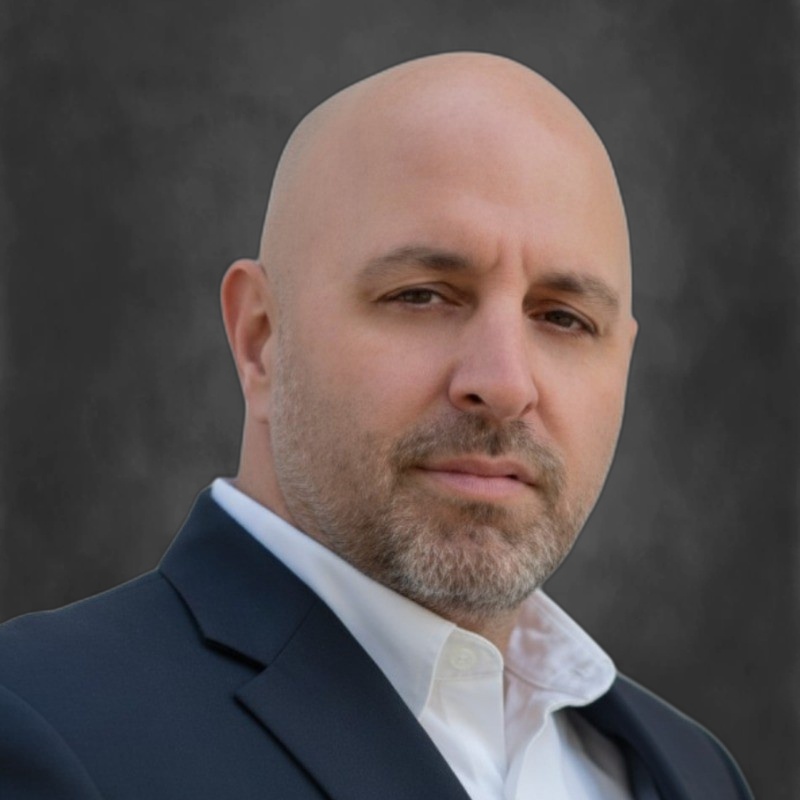
CEO/Co-Founder @ Oatmeal Health | AI Lung Cancer Screening | Almost Became a Doctor | Engineer | Follow to Share What I’ve Learned Along the Way
I help patients get the care they need earlier, preventing late-stage cancer.
That’s been the throughline across three companies and almost 20 years in healthcare. At ReferralMD, we fixed broken referral networks so patients didn’t fall through the cracks. At Oatmeal Health, it’s lung cancer: building the diagnostic and screening infrastructure so the 85% of cases caught too late get caught early instead.
Today as CEO of Oatmeal Health, I lead a team embedding AI into radiology workflows to turn routine lung CT scans into reimbursable cancer risk assessments. We partner with FQHCs to reach underserved communities, and with health systems and payers to make early detection economically sustainable. Think HeartFlow or Cleerly, but for lungs.
Between companies, I advised at Techstars and Plug and Play, mentoring founders building in digital health. That experience shaped how I think about what separates companies that ship from companies that stall: distribution, reimbursement, and clinical trust, not just technology.
I’m a CancerX alumnus, a 3x healthcare founder, and someone who believes the biggest problems in cancer aren’t scientific. They’re operational.
We’re hiring mission-driven builders at Oatmeal Health. If you want to work on something that matters, reach out.
When I’m not working, I’m traveling, mentoring, and keeping up with one very energetic husky. 🐾
Substack – The Oatmeal Bite:
Millions of patients get less care because of who they are, where they live, or how they look. I’m fighting to change that. CEO @OatmealHealth, a startup built for the underserved. The Oatmeal Bite: intel for clinicians, investors, and advocates.
Jonathan Govette
CEO of Oatmeal Health
Substack:
https://oatmealhealthjonathangovette.substack.com/